A belated post, from my first weekend:
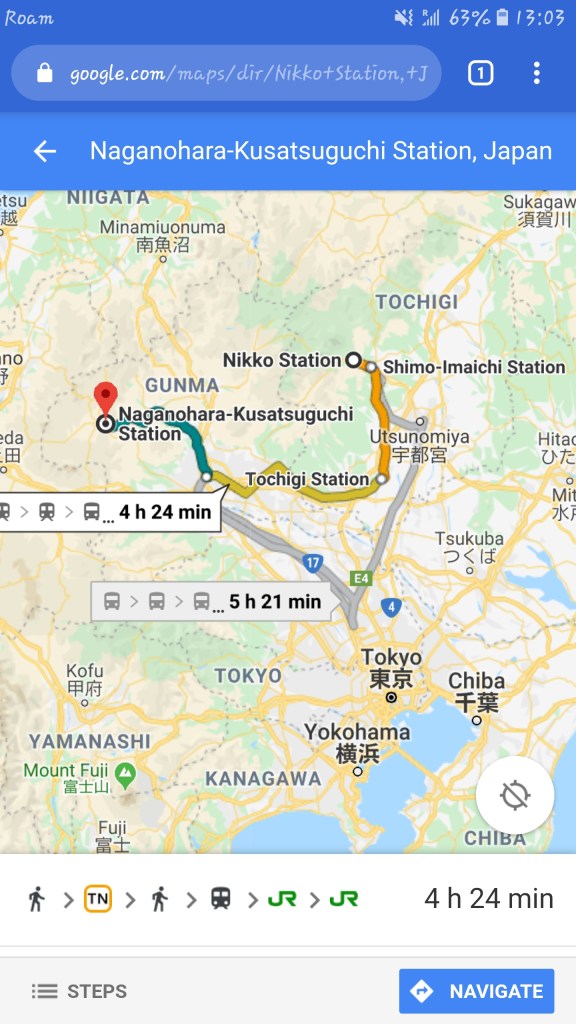
And a map, because Japan is big.
I wrote a haiku to summarize my Saturday feels:
Heated toilet seats
When the mountain air is cold
Keep my tooshie warm.

The fall weather wouldn’t come to me, so I went to it! I wimped out on the very traditional Japanese style room and went for the semi-traditional room (the primary difference being that the semi-traditional room at least has a space heater. What can I say? I’m my mother’s daughter.)
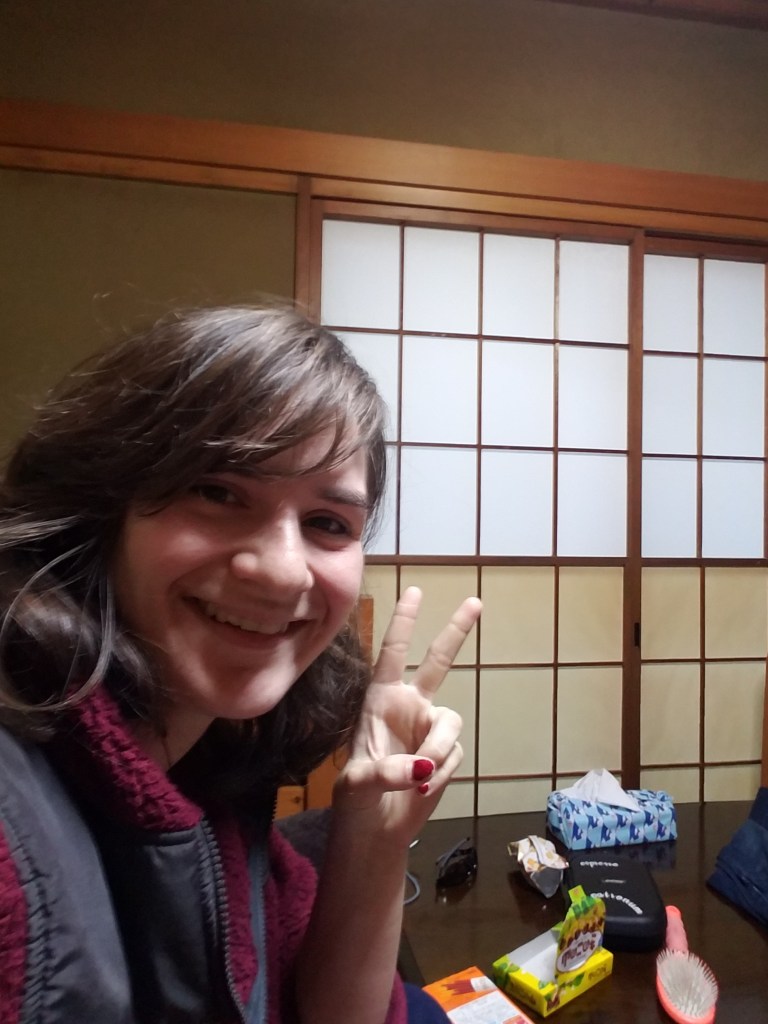
It was 2° C when I woke up in Nikko, in Tochigi prefecture, Saturday morning. It’s known for soba noodles, yuba (skimmed off the top of soy milk, frequently sugared), and being the final resting place of one Tokugawa Ieyasu, founder of the shogunate.

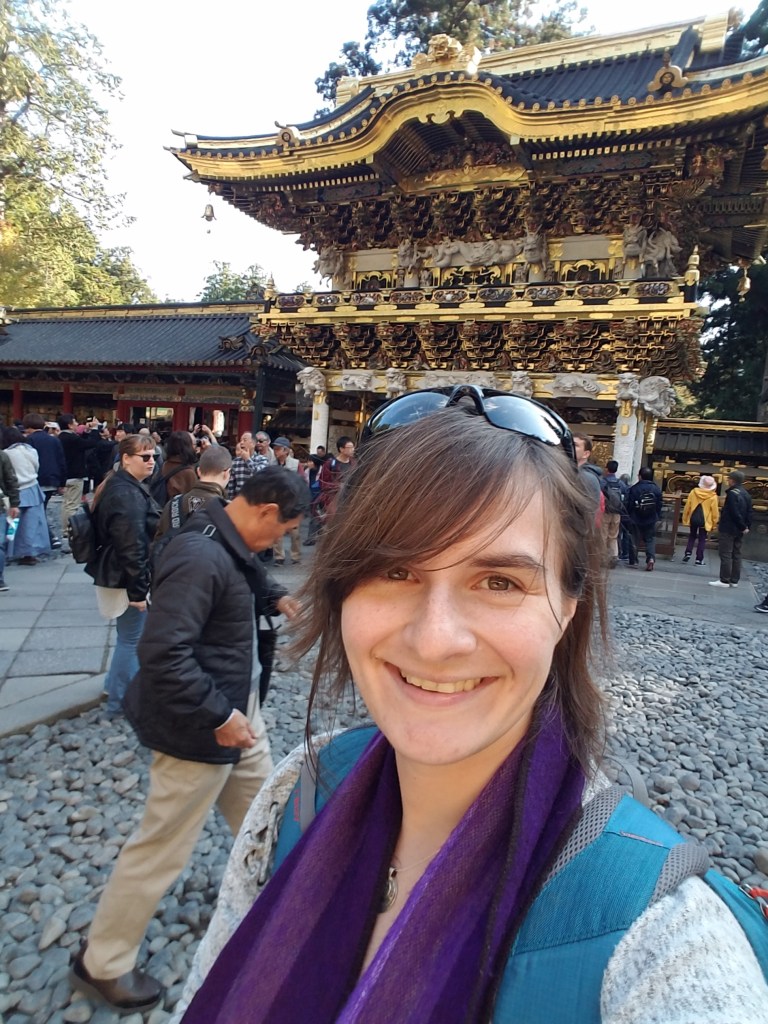

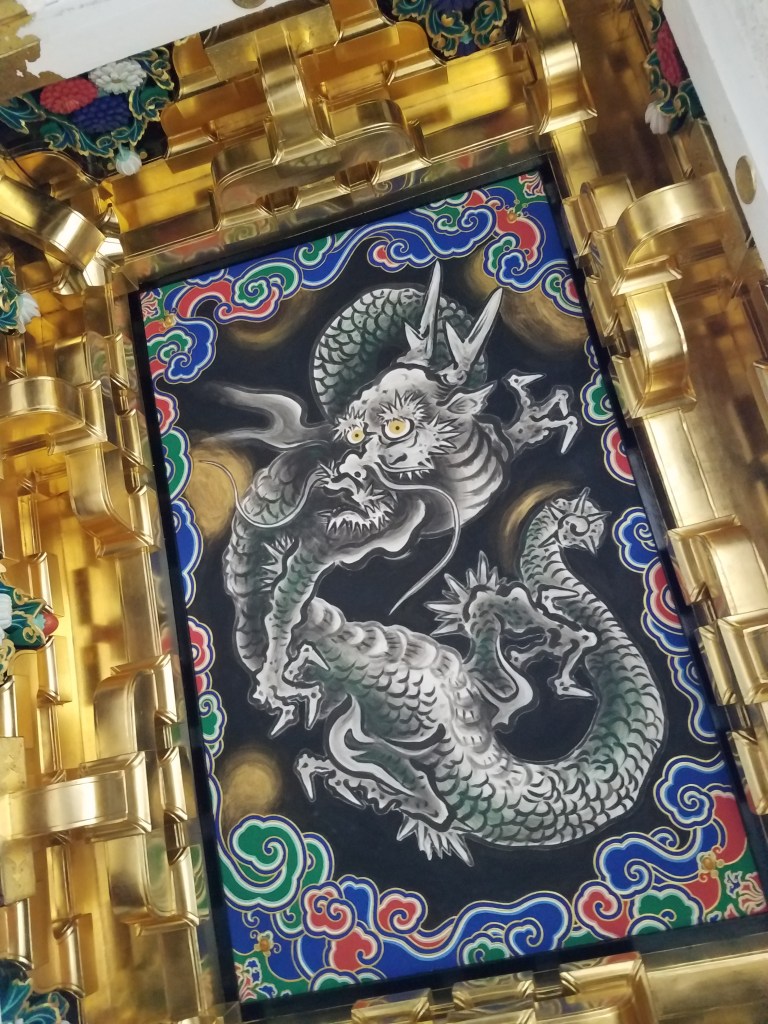
Rest assured that I have done an excellent job getting my ancestors in good with the Shintoists and Buddhists. They accept both my donations and my offerings, as well as my acts of filial piety.
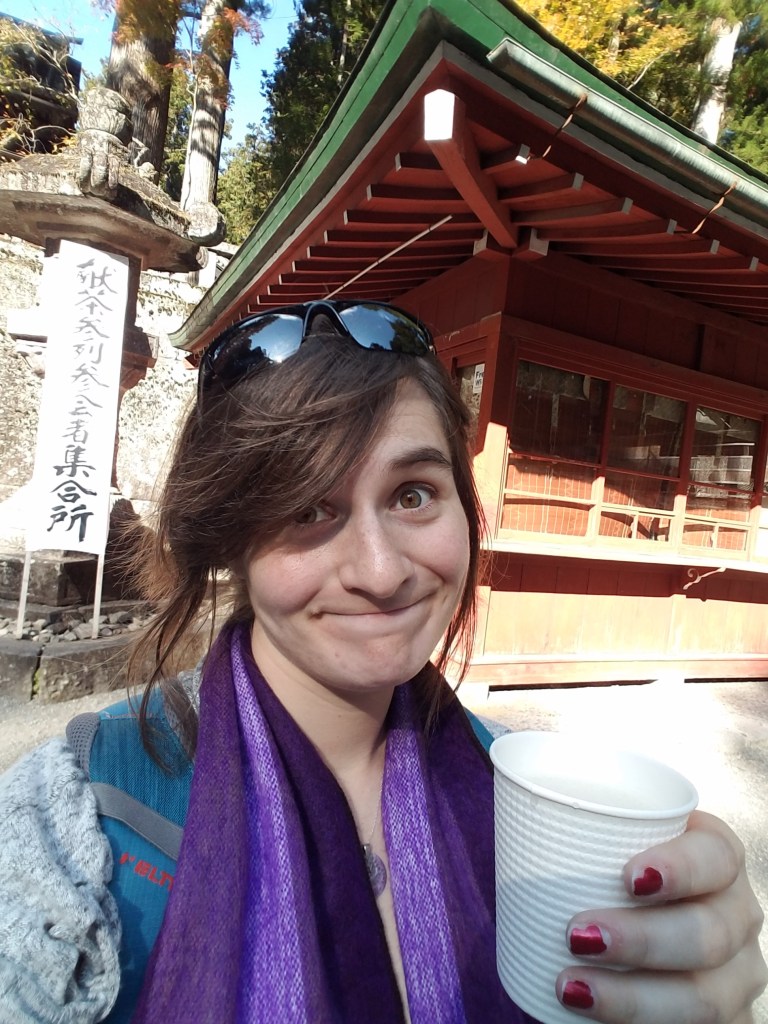
Ieyasu’s grave is at the top of 207 stairs; I bought a bell, ostensibly a good luck charm, but mostly for 414 steps of entertainment value.
Since then, I’ve been using it as a bear bell; the luck must work, because so far, so good!
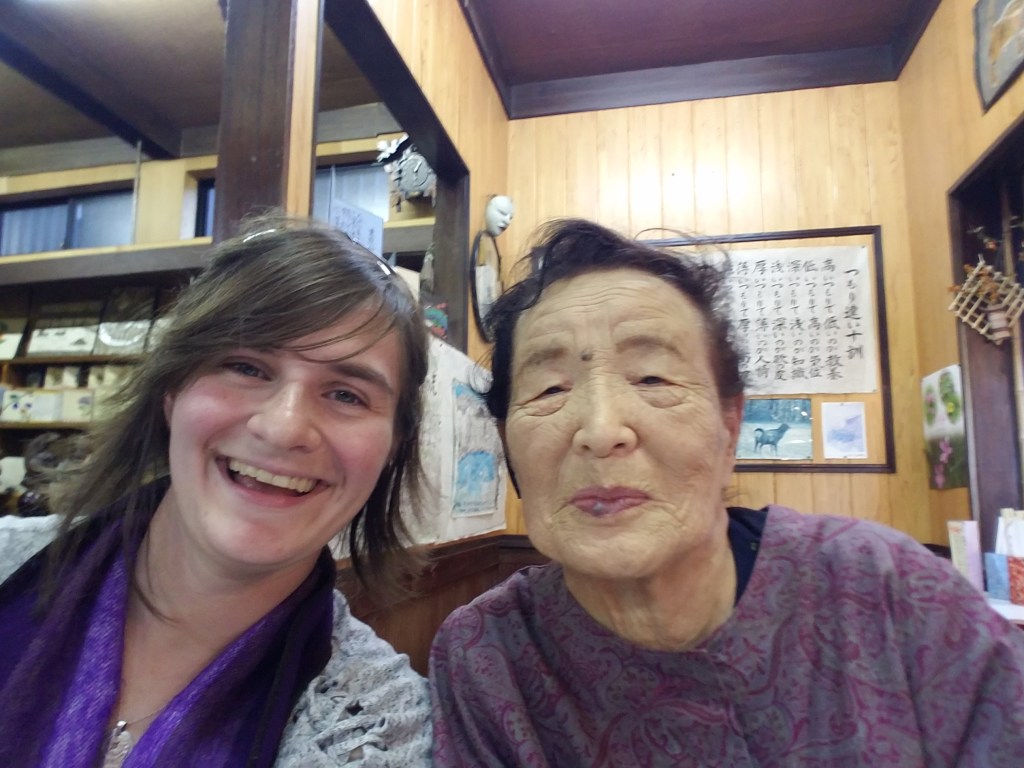
After wandering the temple/tomb, I did what I do best; strike up animated conversations, with people who can’t understand me, over food. I went to try the aforementioned soba and met Shizue-san, the 98-year old mother of the restaurant owner, who sang folk songs and played Wild Gesticulation with me. She also taught me the word for mushroom, which roughly translates to ‘mountain vegetables’. It took me a significantly longer time to decipher her explanation of “kuro-ba” (a poem about four leaf clovers.)
I’m getting the hang of this spontaneous travel thing. The hardest part is making sure I have enough battery left on my phone to book a place, which tends to lead me into coffee shops and tiny bars for charging breaks.
I made a great impression on a group from Brazil, who left the bar before me, caught the same train, transferred to the same line, and then checked into the same hotel. I think the distinct jingling of the good luck bell on my bag added to the whole slasher-movie feel.
You win some, you lose some.
Seeing as I’d put in 30+ miles in under a week, my next choice of destination was an easy one; Kusatsu Onsen. Hot springs, foot baths, and volcanoes, oh my!

All in all, it was a very cool town, perched on the slopes of an active volcano. I had planned to hike to the summit, but apparently it spews rocks or something and such activity is highly ill advised. Instead, I learned about outdoor foot baths and how not to boil alive in an onsen.
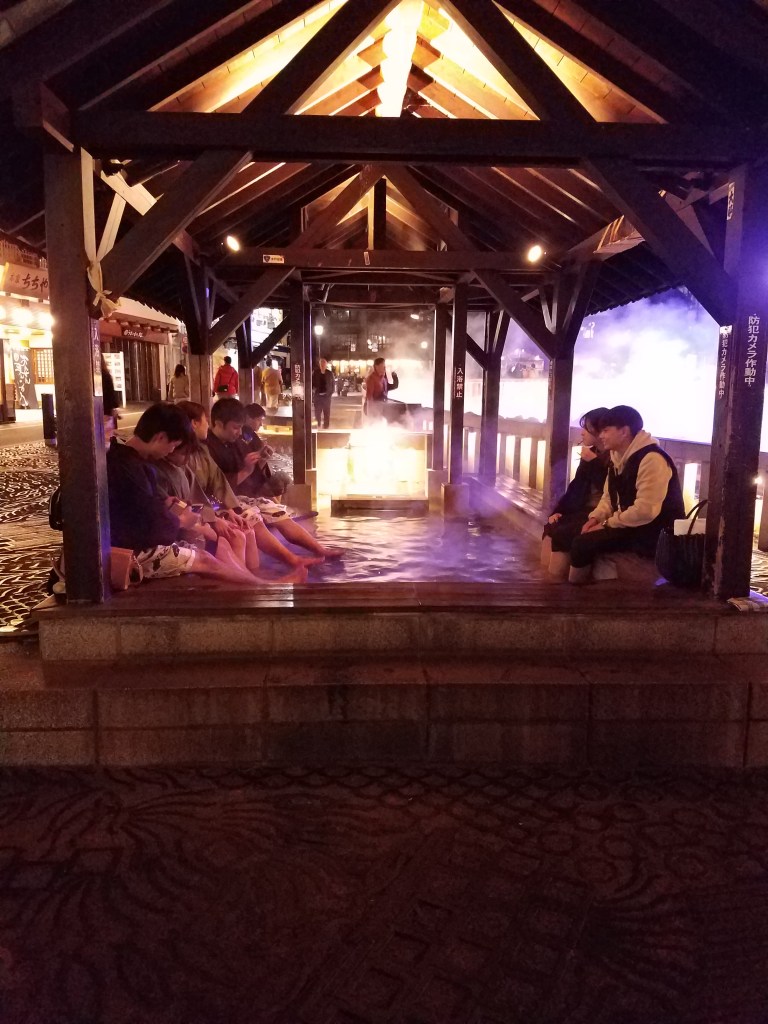
The water in Kusatsu onsen comes out of the spring at around 65° C. The onsen-gurus of yesteryear determined that adding cold water would detract from the health benefits, so that’s out of the question. Instead they devised a few, more active, methods of managing the burning temperatures.
The first is yumemo. It combines giant tongue depressors, singing, and team sports.

As for the other method…well, they say if you put a frog in boiling water, it’ll jump back out. Which is true, really, of frogs and people. But in the case of the Japanese (as well as the particularly witless, and never-say-no adventurers) it’ll just jump back in.
First, one must pour thirty cups of the hot water over their head. This is to prevent hot flashes and diziness. Then, a bath master directs a large group of people to enter and exit the bath. They enter for three minutes at a time, rush back out to cool off, and then start again.
Nowadays, the theory is the same, though it is no longer a team sport and there is no bath master. I learned on the fly, from some elderly ladies who saw me hop back out of the pool like I’d just jumped on a trampoline (the fine difference between ‘nice bathtub’ and ‘we soft boil eggs in this’ being lost in translation.) They assured me that the temperature was bearable, you just had to enter and exit a few times, first. I was not surprised to discover that the benefit of that particular bath was exfoliation.
I cannot speak to it’s effectiveness; I’m not sure I have skin left.
And yes, they really do cook their eggs in the onsen. Not, however, the bathing ones. And here I was, thinking that nice sulfuric scent came from the volcano!

 myTia
myTia 